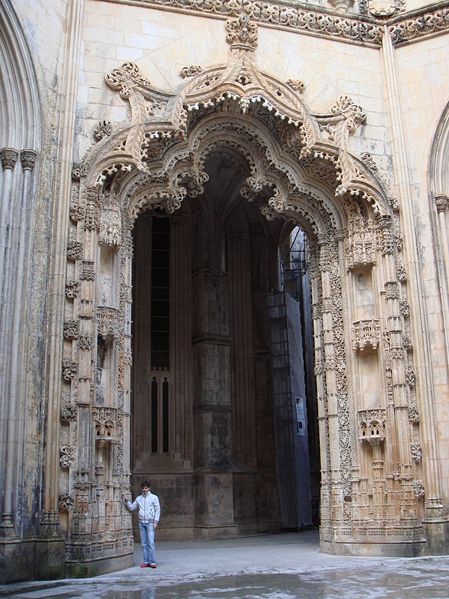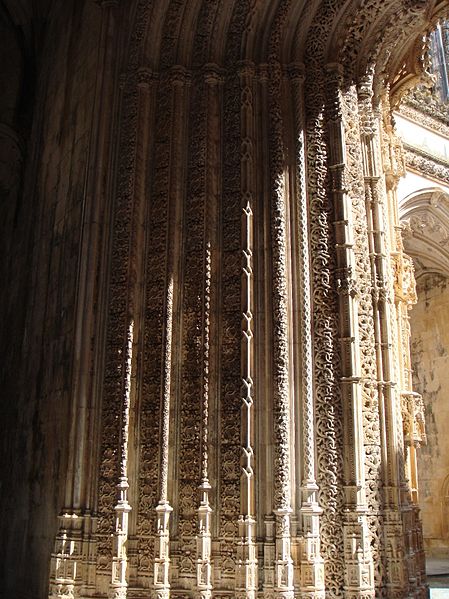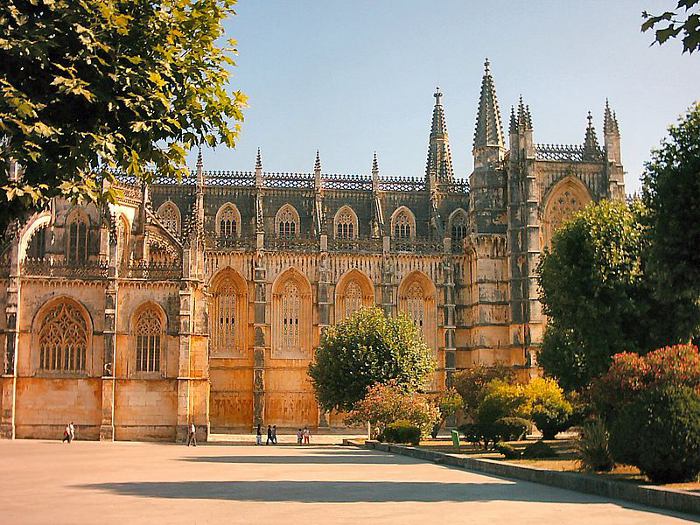
The Monastery of Batalha, also known as Monastery of Santa Maria da Vitória, is the most important example of Gothic architecture in Portugal. It was built on the orders of João I John to thank the Virgin Mary for the victory over Castile in Aljubarrota. Its construction began in 1386. The monastery was entrusted to the Dominicans, a mendicant order characterised by its dedication to study and renunciation of temporal goods.
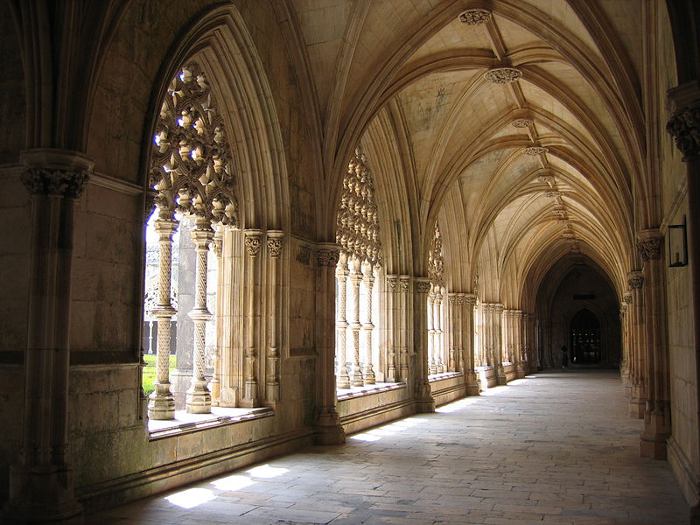
In its interior, the Founder’s Chapel contains the royal tombs of João I, his wife Philippa of Lancaster and their sons.
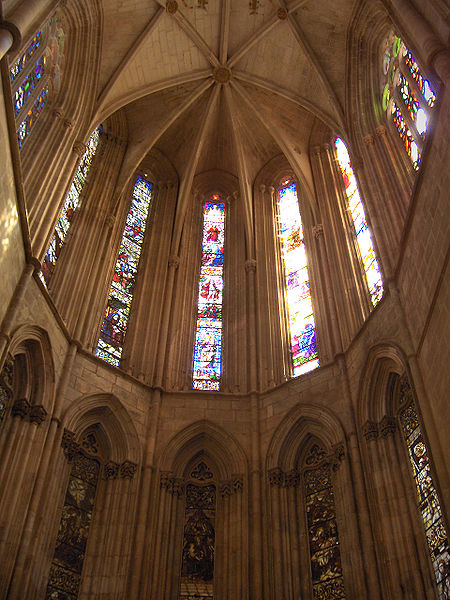
The stained glass windows depict various biblical scenes, including the Resurrection of Christ and the Visitation of Our Lady.
Outside are numerous gargoyles, typical of Gothic architecture. Many believed that these monstrous figures would scare away the devil who was to be found everywhere, even in holy places.
More than six hundred years have passed since its construction, during which it has suffered destruction and losses. The 1755 Earthquake destroyed parts of the Monastery that were never rebuilt. During the French invasions, the Cloister of João III was completely destroyed and the later dissolution of religious Orders only worsened the situation. The Monastery was practically abandoned until 1840, when the campaign to restore National Monuments began.
Influenced by the romantic movement of the time, the restoration highlighted its Gothic style.
In 1907, the Monastery is classified as National Heritage and in 1983 it was included on UNESCO World Heritage list.